
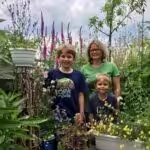
Andrea Jaschik
Fascinating development of plant communities in containers or balcony boxes
Andrea Jaschik and her Hortus Aquis were deservedly awarded 1st place in the planting competition „We’re doing something for bees!“ 2021 in the balconies and terraces category. Two further awards followed in 2021: „Award-winning nature garden in gold“ from the „Thousands of gardens — thousands of species“ project and the „Butterfly-friendly garden“ award from NABU. In 2022, she won the special prize at the #beebetter Award for her green fingers and her commitment to biodiversity. The highlight is the nomination for the „European Award for Ecological Gardening“ 2023 by Natur im Garten International.
The Hortus Aquis is a 15 m² south-west-facing roof garden on the 3rd floor above the rooftops of Aachen. There used to be room for a hammock, apart from the barbecue, but those days are long gone … Since 2011, a variety of permanent communities of early bloomers, trees, shrubs and wild perennials have formed in around 60 containers. Andrea Jaschik also plants vegetables every year and sows bee-friendly wildflower meadows. The biotope elements include a feeding house and nesting boxes for birds, various nesting aids for bees, a bumblebee box, a deadwood pyramid, a stone wall, a lean bed and a marsh bed as well as a pond. 15 different bird species have already found their way to the feeding area. As an “outpost”, the Jaschik family has taken over the sponsorship of a tree slice in their street. Andrea is also involved in the „Johannesgarten“, the community garden in her district. Through her outstanding public relations work, she wants to inspire people to garden in an insect-friendly way.
Content of the picture presentation:
Andrea shows tried and tested plant combinations on her roof terrace in balcony boxes as well as in large planters with shrubs, herbs, wild plants and flower bulbs. What works, what doesn’t, how and why do the original plantings change? This changeability over time has the same effect in the planter as it does in the garden when you garden with nature and give it space to unfold. Plants are dynamic components. They are influenced by the climate, change depending on the season and develop in interaction with the plants used in the respective locations. If suitable conditions are created, plants seed themselves. This relaxed way of gardening is less work and is also beneficial for insects and birds.
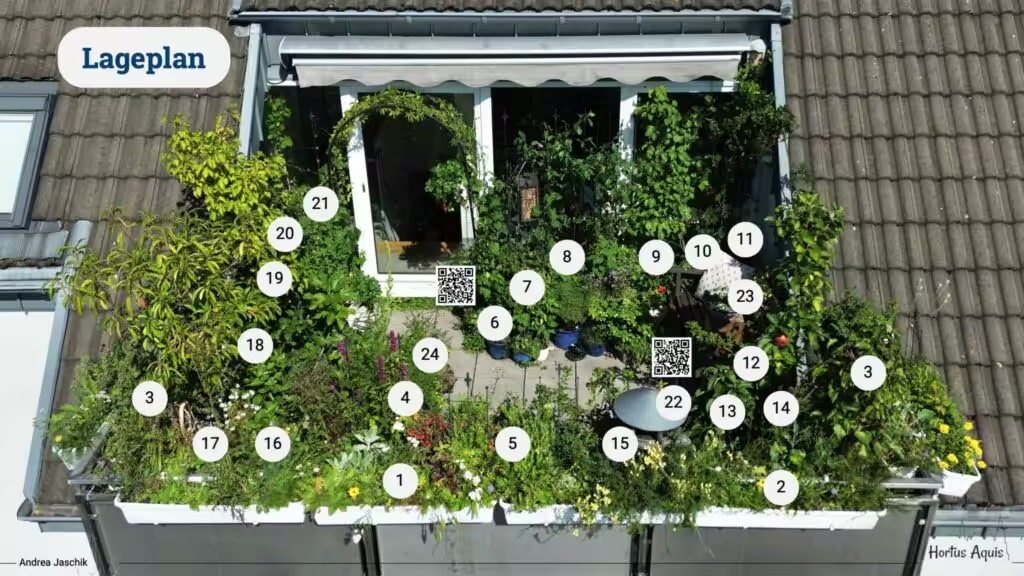
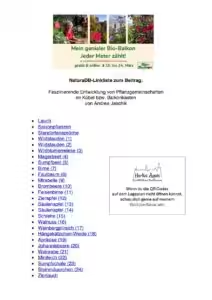
If you don’t use Instagram, don’t have it installed on your smartphone or go through life without a smartphone, you won’t be able to open the QR codes that lead to the plant communities stored at NaturaDB. For those, Andrea has creatively and quickly made a PDF that leads to the proven plant communities. Thank you Andrea for sharing your many years of experience with us in such a lovely way that everyone who wants to can come along on the journey to a diverse biotope in pots and containers in a small space.
Your book recommendations





The bookstore around the corner should always be your first choice.
Social Media
Websites
- Blog Hortus Aquis
- Development of Hortus Aquis from 2011 to today
- 1st prize planting competition “We’re doing something for bees!” Balconies/terraces category
- The roof terrace in the Hortus network
- The Apollonia island of life in the Hortus network
- Winner of the 2022 special prize at the #beebetter Award
- Quarks: Insect-friendly balcony: Can AI measure biodiversity?


 English
  Deutsch
11 Responses
I still can’t find an answer to the question of how my little American walnut plant (future tree) can survive the winter on the balcony in its clay pot. If you could give me some advice I would be so grateful!
My dwarf walnut is the most sensitive tree on our roof terrace. It is the only one that gets special treatment in winter. I move the tub to the glass door, because the heat from the apartment radiates onto it. It is also protected from cold winds. I put bamboo sticks that are slightly larger than the tree into the tub and then pull a winter protection bag with a zipper over it. This prevents the fleece from lying on top of the plant. The sack is pulled closed at the bottom and also protects the pot. For me, this is sufficient protection. You could also place the pot on a wooden board (depending on how cold the balcony floor is) and wrap a bamboo mat around it. The soil could be covered with leaves and the trunk of the tree wrapped in fleece under the winter bag. Another tip is to place the pot in the shade so that the sun cannot warm the soil and the tree wants to absorb water when the ground is frozen. In my experience, the danger is not during the actual winter days, but when the tree has already sprouted. My very sensitive shoots have already frozen twice. So keep an eye on the weather forecast and reconsider the fleece to be on the safe side if there is a risk of frost or cold winds. And don’t forget to water on frost-free days.
Good luck and best wishes
Andrea
Hi Andrea, your explanations are great, so detailed!
This year a lot of things have grown in the gaps on our balcony that I deliberately left standing. Two hollyhocks that have flowered for so long and have produced seeds again. The cranesbill also flowered in the gaps. It’s unbelievable how little space they need in the root area…
Another thing I love is the stonecrop, which attracts so many insects and comes back every year.
The „old“ willow catkin — 13 years old — in the tub is so rooted that hardly anything grows there except grass. But the catkins appear punctually in spring and are already being visited by bees.
We also want to „move in“ a deciduous tree, thanks for introducing it!
I can take a lot of ideas from you. Thanks again and good luck for the future!
Greetings Elli
Hello Elli,
Thank you very much. It’s amazing how attitudes can change when you create a natural garden. When we moved into the apartment, we laid extra wooden tiles to hide the „weeds“ in the joints of the stone slabs. I now enjoy everything that grows there. The compost worms too. They use the joints as paths from one planter to another. I watch out a bit when plants that form tap roots go to seed. You don’t know how deep they will root and whether they will damage the building fabric.
The deciduous tree is a great shrub. Despite the small container, it is very vigorous in my garden, but can also be pruned into shape without any problems. Initially, I rigorously cut off all but the strongest shoots close to the ground. The following year, I shortened the side shoots to 20 cm, as I wanted to grow the lazy tree as a columnar tree. That didn’t work out so well. The side shoots withered and the tree grew strongly in the crown area. I will try to bring some shape into it next year. And I can recommend placing the tree against the parapet. Unfortunately, our awning could no longer be extended in the second half of the summer because the rot tree was in the way.
Oh, you also have an „old“ willow catkin, that’s lovely. Plants that have been with you for so long really grow on you.
Enjoy gardening on your balcony too!
Best regards
Andrea
Dear Andrea,
That was a record-breaking preview! It was wonderful, I can only marvel at what you can do. I’ll start with the greenery first. I only have herbs and winter lettuces that need to come up first. I started with the balcony 3 years ago, but got carried away (I’m 80). So this year I had Artemisia annua and a few other plants that died one after the other. Watered too much, fertilized too little? I don’t know. I will take a closer look at your beautiful garden. Maybe it will be better next year. Thank you again for your wonderful talk with so many suggestions. It’s obvious how much you enjoy it. And patience! Keep up the good work! Dagmar
Dear Dagmar,
Thank you very much for your kind words. I’m still amazed at what can be done on the balcony. You get new ideas with every new congress lecture, it never gets boring.
Wonderful, herbs are great for us and for the insects. That’s a good start. If you observe the plants, you can learn from your experiences. That’s always the case with gardening and not everything succeeds every year. I also really like my Artemisia. I’ve just harvested my plant and left a few stems with flowers so that it can self-seed, as Birgit recommended. It worked well last year. I didn’t even have to transplant the seedlings, I just fertilized them.
A good herb harvest in the coming balcony season!
Best regards
Andrea
Hello Andrea, thank you very much for your presentation. A very nice balcony.
My questions would be: how much volume do your planters have (especially the pot with the deciduous tree)? What kind of soil do you use?
Thank you in advance for your answer.
Kind regards
Sigrid
Dear Sigrid,
I’ve had the alder buckthorn growing in a 40x40 container for three years, with perennials and early-flowering plants underneath. So far it is happy with it, the soil is not yet fully rooted. It is very vigorous, so you need to be prepared to prune it carefully, see Elli’s comment. You can use universal or container plant soil. Look for a peat-free product in organic quality.
Have fun with your deciduous tree. It is a very robust tree and will hopefully attract the lemon butterfly!
Best regards
Andrea
Dear Andrea,
a firework of information and a super great presentation of your paradise!
A thousand thanks for that!
How do you refresh the containers and boxes? If I’ve understood correctly, you don’t repot the plants but leave them permanently in their planters. Do you then add new soil or do you just work with fertilizer? Which fertilizer do you use?
I always do so much work to give the plants more space, which doesn’t seem to be necessary.
I once heard that the alder tree prefers to grow in wet soil. Is that true? Can I put it in really shady and moist areas?
Many thanks in advance and happy experimenting!
Kind regards
Ursula
Dear Ursula,
I’m glad you were able to take some inspiration from my talk.
I don’t actually repot the plant communities in the containers. They don’t get any new soil either. Vegetables, especially the heavy growers, are given sheep’s wool pellets when they are planted. During the growing season, I fertilize with liquid fertilizer if necessary. I use the two organic fertilizers from Substral for tomatoes and fruit & vegetables. Depending on what is mainly growing in the tub. I also fertilize the wild perennials with the tomato fertilizer. Once when they sprout and once before the second flowering. This promotes flower growth and no further fertilizer is then necessary. The large tubs also get compost from the worm bin twice a year. When I can harvest in early winter and late spring. When I didn’t have a worm bin, I used compost from the garden center and mixed it with a soil activator (Oscorna). This also works very well.
My deciduous tree is in partial shade. I can’t say how much water it needs because it draws it from the irrigation system itself. However, it is very robust and I think you can give it a try in a moist location in partial shade. Of the trees in my roof garden, it is the most vigorous, so it’s best to plan enough space for it.
Have fun with your projects
and best regards
Andrea
Dear Andrea,
Thank you very much for taking the time to answer me in such detail.
You have helped me a lot with this!
Unfortunately, my worm box project failed and it was a very painful experience for me. Despite all the support from the Wurmkiste.at team, I unfortunately had all kinds of problems with the box that you can’t even imagine or think of, but I overcame them. In the end we were on vacation for 12 days and when we came back all the worms were dead! There was only mud in the crate! An absolute shock for me! I don’t know what happened, but I feel responsible for it and can’t deal with it at all! After almost a year, the worms were already part of the family and I killed them all! Unfortunately, it is out of the question for me to take on this responsibility again and I have got rid of the box. So thank you very much for your tip regarding the alternative to worm compost!
I also wish you much joy and success and hope that we can still hear and learn a lot from you!
Best regards
Ursula