
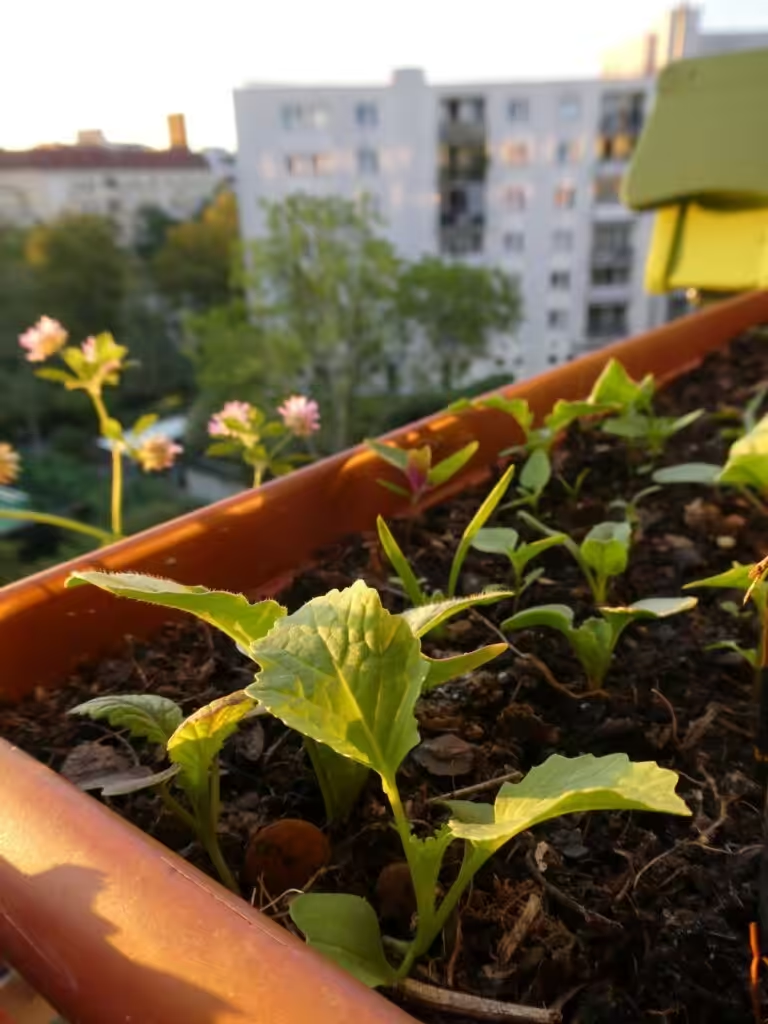
Buy good soil yourself
If you buy the plant substrate from a DIY store, garden center or online, you should consider what you need it for. There are Special soil for seedlings. This is low in nutrients, fine-grained and loose so that the seeds have optimum conditions for starting. For growing vegetables, we need the nutrient-rich, coarser soil. Vegetable soil. Mediterranean herbs in particular have special soil requirements. And often prefer sandy and calcareous soils, but the extra Herbal soil use. I do without the cheap potting soil as things stand today, because tests have shown that it often contains heavy metals. This soil is also often heated to such a high temperature that it hardly contains any microorganisms. It is worth spending a little more money on good organic quality soil from a brand manufacturer. We want to eat our home-grown fruit, vegetables and herbs with appetite. To do this, we need to be sure that the soil does not contain any harmful substances.
I also don’t buy soil that Peat contains. It can take up to 1000 years for one meter of peat to form in the unique bog habitat. In Germany alone, around ten million cubic meters of peat are used for horticulture every year. As peatlands disappear, so do the animal and plant species that specialize in them. When the peat is removed, large quantities of carbon dioxide and nitrous oxide are released, which is not good for our climate. Make sure you check the declaration on the soil bag that the soil is peat-free. BUND has produced a buying guide: Potting soil without peat. Vegetable soils can also be found there. Organic soils can also contain peat. Look out for the label “Peat-free” or “Does not contain peat”.

To avoid buying too much or too little soil, you should briefly estimate how much soil you need before going to the DIY store or garden center. Around 12 liters of soil are needed for a 40-centimeter-long balcony box. Accordingly, you can expect to need around 30 liters for a one-meter-long box. For a flower pot with a diameter of 46 centimetres, you can plan on around 40 liters of soil.
Mixing good soil for the balcony yourself
It has become so common to buy ready-made potting soil, although this purchased potting soil is basically only designed for one season, contains nutrients for one season, remains stable, stores water well and is air-permeable. It is finer to mix your own potting soil from various components. A simple mixture is 5 parts garden soil from an organically cultivated garden, 2 parts mature compost, 1 part sand. If the garden soil is less loamy and more sandy, do not mix in extra sand.
For growing in boxes, the gardening book author recommends Andrea Heistinger in cooperation with Noah’s Ark a mixture of 65 % garden soil, 15 % earthworm compost and 20 % pumice (porous volcanic rock).
Refreshing the soil for the balcony instead of buying new
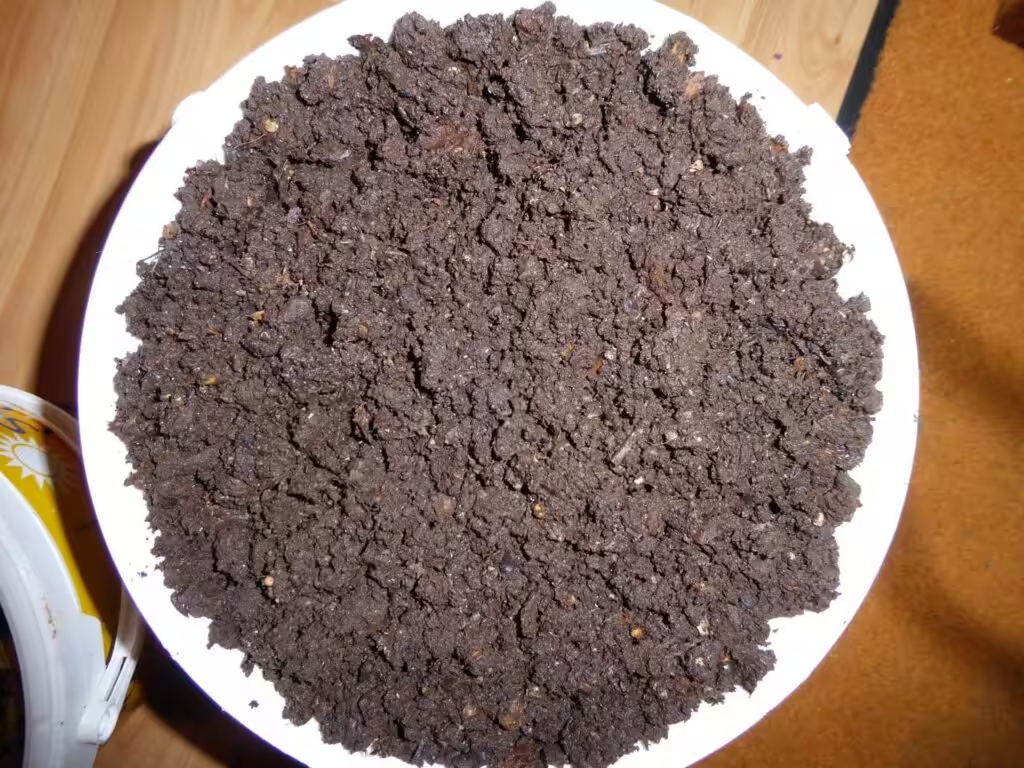
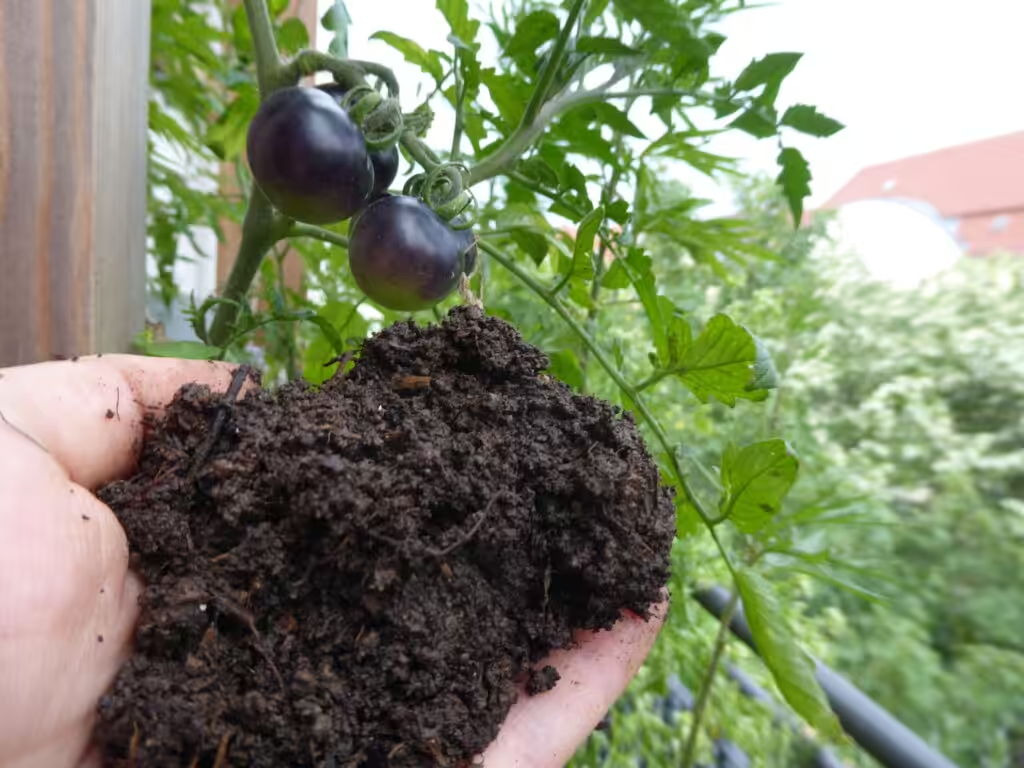
In spring, you should definitely give your plants a refreshment of the soil. There is an argument that if you continue to use last year’s substrate, you run the risk of diseases or pests that have nested in the soil in the previous season being transferred to the new plants. The other view is that the purchased substrate is used up, that it no longer contains any nutrients, at most for lettuce, and that the soil must therefore be completely replaced. I am not of the opinion that we need to buy new soil for all our planters every spring. But we definitely need to enrich the soil with nutrients and loosen it a little. Good soil has the highest possible Humus contentso that the nutrients are stored and the soil is well aerated. We can freshen up the soil, for example, by adding 10 % worm humus from the worm bin. For heavy eaters such as tomatoes, 15 % worm humus can also be mixed in or sprinkled on top of the plant pots — but in wet weather without sunlight so that the fine microorganisms survive. You can even buy worm humus in different pack sizes in my health food store. You can also mix 1/3 compost with the old soil from the balcony box. Every gardener has their own special recipe. Try it out here too. Read more about this: 5 ways to get strength into old balcony box soil. For balcony gardeners, I recommend sustainable worm humus, which can be made from your organic waste. You can read about my 5 years of experience Best fertilizer for the balcony. Worm humus from the worm bin.


 English
  Deutsch
12 Responses
Hi Birgit, it was a great conference and I look forward to hearing from you afterwards on this exciting topic. As I am lucky enough to have a small garden, I mix the old soil with sieved compost and fertilize with nettle manure. Thanks to the great interviews, I have already watered with pureed nettles and hope everything grows well ☺. I’m already looking forward to more good information for my balcony and garden.
LG Silvia
Dear Silvia, you will continue to hear about the organic balcony. I love gardening and urban nature, slowing down is my theme, there is a lot to share. I am very pleased to read from you. It’s great that you’ve already fertilized with nettle smoothie, I’ll do that soon too. The nettles I collected yesterday are going into my own green smoothie for now, the one I made this morning was delicious. Thank you for sharing your approach. There are some wonderful posts on Facebook right now about this topic. I hear so often that people throw away their balcony soil after a season. Now I read that many people have found their own personal method, which is great.
Thanks for the informative report. I am lucky enough to be able to make my own compost and it is now also used for the many pots/bowls/beds.
LG
Carola
Dear Carola, my faithful gardener. Having your own compost is a great thing. You know what you’ve put in it and the power of the compost goes straight into the new plants. Keep up the good work. I wish you a good season from the bottom of my heart. All the best Birgit
Hello Birgit,
It was a great conference and I learned a lot of new things. My balcony is already looking really nice and I’m going to plant even more edible fruit and vegetables. It’s great that the information and exchange is continuing!
Best regards
Beate
Dear Beate, thank you for the feedback. We are continuing with great pleasure. We want many more green, colorful balconies from which you can snack and really harvest, paradises for bees and other insects and of course birds. It’s great to have you with us. Do you know our Facebook group? https://www.facebook.com/groups/1291278840940692/?fref=ts
There is a very good exchange. You are very welcome!
What is worm soil?
Dear Barbara, compost worms process organic waste into high-quality worm humus or worm soil. Please read the following blog post by me: Our worm bin is a compost heap for the home or balcony.
(https://bio-balkon.de/unsere-wurmkiste-ist-ein-komposthaufen-fuer-die-wohnung-oder-balkon/)
„Auf die preiswerte Blumenerde verzichte ich nach heutigem Stand, weil diese in Tests nachgewiesen oft Schwermetalle enthält“
Gibt es hierfür eine Quelle?
Liebe Eys, sicher, habe ich aber nicht zur Hand. Ich führe immer wieder Expertengespräche für die von mir organisierten Online Bio-Balkon-Kongresse https://bio-balkon.de/kongress-12-selbstversorgung/, die darauf hingewiesen haben. Blumenerde wird oftmals aus Klärschlamm hergestellt, der oft schwermetallbelastet ist. Sie wird eben Blumenerde benannt, weil sie für Blumen ist, nicht für den Anbau von Lebensmitteln. Liebe Grüße Birgit
Bei dem eigenen Kompost habe ich immer die Angst, dass die ganzen Schädlinge und Würmer usw ich dann mitnehme zur Kräuteranzucht. Wie kann ich das vermeiden?
Liebe Petra, Angst ist ein guter Schutz, bremst uns aber leider oft auch aus. Ich arbeite mit Wurmkompostierung in einer Wurmkiste https://wurmkiste.at/richtig-kompostieren/?wpam_id=14 und habe keine Angst. In allen meinen Pflanzgefäßen sind Kompostwürmer drin. Wird auch gemulcht bzw. bleiben überhaupt alte Pflanzenreste im Substrat, haben sie immer was zu futtern, durchlüften gut den Boden und düngen gleichzeitig, weil sie das organische Material in Verbindung mit den Bodenlebewesen verarbeiten. Also ich habe da keine negativen Erfahrungen mit Schädlingen bzw. Würmern und keine Ängste. Für mich sind Schlüssel zum Erfolg große Pflanzgefäße, Pflanzenvielfalt, Förderung von Bodenlebewesen. Genauer/ausführlicher beschrieben habe ich es auch in meinen Büchern https://amzn.to/3sdutSd. Liebe Grüße Birgit