
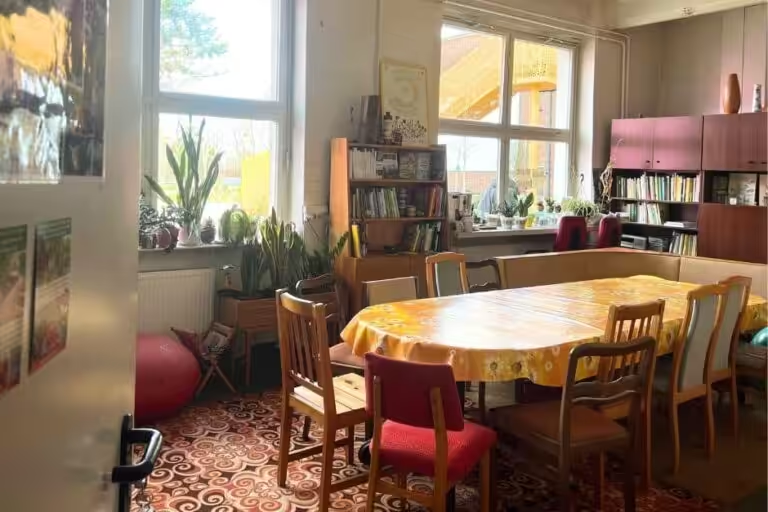
Buying plants and putting them in the place of your choice is not automatically sustainable. On the contrary: you should consider a few important points. Here come Useful tips, how you can make your home sustainable with green roommates and thus make an ecological statement.
How sustainable are plants?
Plants in your own home can make a contribution in many ways. towards more sustainability perform:
- Some houseplants such as hemp, green lily and ivy can filter pollutants such as formaldehyde and benzene from the air. At the same time, they regulate the humidity and ensure a pleasant healthy indoor climate.
- During photosynthesis, plants convert CO₂ in oxygen around. Although this CO₂ compensation by indoor plants is comparatively low, they still make their contribution.
- Plants replace artificial decorations made of plastic or other less environmentally friendly materials, for example — you can also set a clear signal for sustainability with these.
5 tips for sustainable living with plants
By now you know that Plants in the home alone is not enough to make a green statement. But what else exactly do you need to consider? To help you get started, I’ve put together the following 6 useful tips put together for you.
- Choose sustainable plants
First of all you should only sustainable plants select. How do you get there? Quite simply, here are a few tips and tricks:
- Pay attention to Concrete seal, that characterize sustainable plants — e.g. Demeter, Naturland or EU organic seal.
- Visits one Organic nursery — Here you can be sure that your new sprouts come from ecologically sound seeds.
- Propagate your plants with Cuttings or offshoots instead of always buying new ones — this way you save valuable resources.
- Swap plants, by canvassing plant swap markets or looking around on eBay classifieds, Facebook groups and neighborhood apps. You can not only swap plants, cuttings and offshoots, but also saucers and planters.
AttentionOrganic houseplants involve water-intensive cultivation and high CO₂ emissions for transportation to the point of sale. So it’s a good idea not to buy too many of them!
- Choose the right soil
Of course you also need the right plant soil, so that your green roommates can grow and thrive without any problems:
- Universal soil is suitable for most houseplants, flowering plants and potted plants.
- Herb and sowing soil is intended for herbs and young plants, for example.
- Cactus and succulent soil is — as the name suggests — the first choice for cacti and succulents.
- Vegetable soil provides a wide variety of vegetables such as tomatoes, peppers and zucchinis with all the nutrients they need.
- Rhododendron and bog garden soil is an acidic soil that is perfect for growing rhododendrons, blueberries and hydrangeas, for example.
Here appliesIn any case, make sure that the plant soil is free of peat. Peat extraction is anything but environmentally friendly — it destroys the habitats of numerous animals and plants and is associated with enormous CO₂ emissions.
- Focus on self-sufficiency with herbs, fruit and vegetables
The Own cultivation of herbs, fruit and vegetables enjoys great popularity. The best thing about it is that you don’t necessarily need a garden. On the contrary: urban gardening — gardening in urban spaces — is also possible on the smallest balconies and even on windowsills:
- Try a space-saving raised bed on your balcony. With a little manual skill, you can even build a raised bed out of wood yourself.
- A good alternative to raised beds are plant shelves, which offer plenty of storage space for flower pots and the like. They also save space and can be easily placed both indoors and outdoors.
- With special indoor planting systems, you can create an indoor garden without needing the warmth of natural sunlight.
Also a good idea: a Easy-care, beautifully flowering, bee-friendly balcony with wildflowers!
- Use natural plant care
If you want to live sustainably, you should also pay attention to environmentally friendly methods set. Caution is advised, especially when it comes to pests — after all, the use of chemical pesticides can not only harm the environment, but also personal health.
Instead, it is worth natural alternatives. Many problems can be effectively solved with simple household remedies — and without any chemicals. For example, use coffee grounds as a fertilizer — this not only combats pests, but also serves as a natural growth aid.
- Turn discarded containers into plant pots
Sustainability is not just limited to the plants themselves, but also relates to the associated Planters. Unfortunately, it happens far too often that planters made of environmentally harmful materials such as plastic exist.
Set instead on upcycling. In other words: breathe new life into discarded items by repurposing and recycling them. This is not only great for the environment, but also gives you the opportunity to give free rein to your creativity. How about using old wellies, teapots or bicycle baskets as original planters, for example?
Here come a few more ideas for inspiration:
- Transform old tin cans and preserving jars into stylish planters by painting them brightly.
- Make a macramé hanging basket with some string and a few simple knots, which looks particularly good in small apartments.
- Old wooden crates and pallets also make wonderful rustic planters — with a little color, they become real eye-catchers in your home.
Creating a sustainable home
No matter how small your home is — even in the smallest of spaces you can a conscious sign of sustainability plant. But make sure you choose environmentally friendly plants, the right soil, natural plant care and use upcycled planters.





 English
  Deutsch