You are currently seeing a placeholder content of YouTube. To access the actual content, click on the button below. Please note that data will be passed on to third-party providers.
More informationWe all know them, but often we can only really appreciate what surrounds us when we are aware of it. I would like to inspire you to look, listen and smell even more often.
Be part of it! Grow your own edible wild plants rich in vital substances. We start with the three most important edible wild plants. „The wild triumvirate“ consists of:
- Stinging nettle
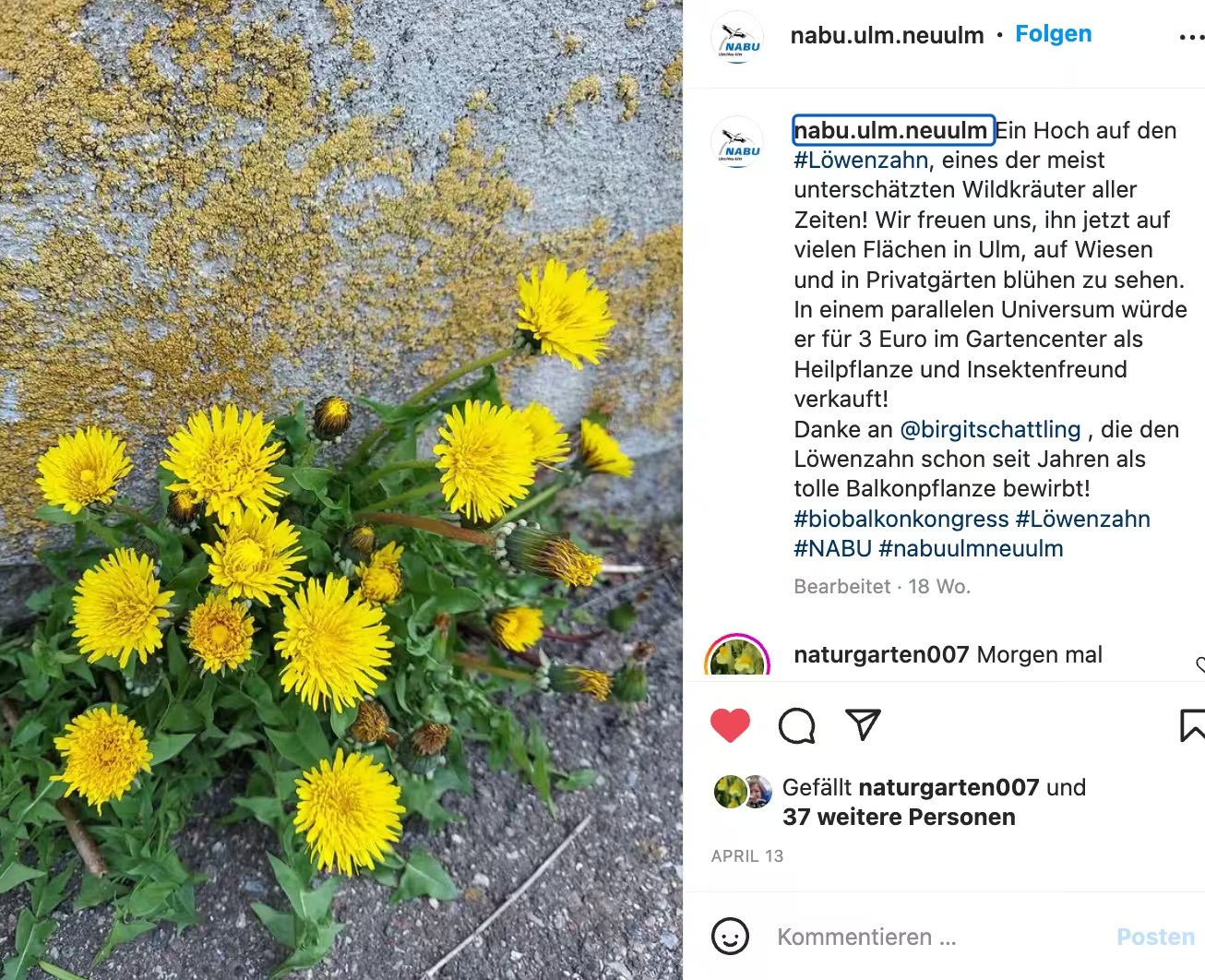
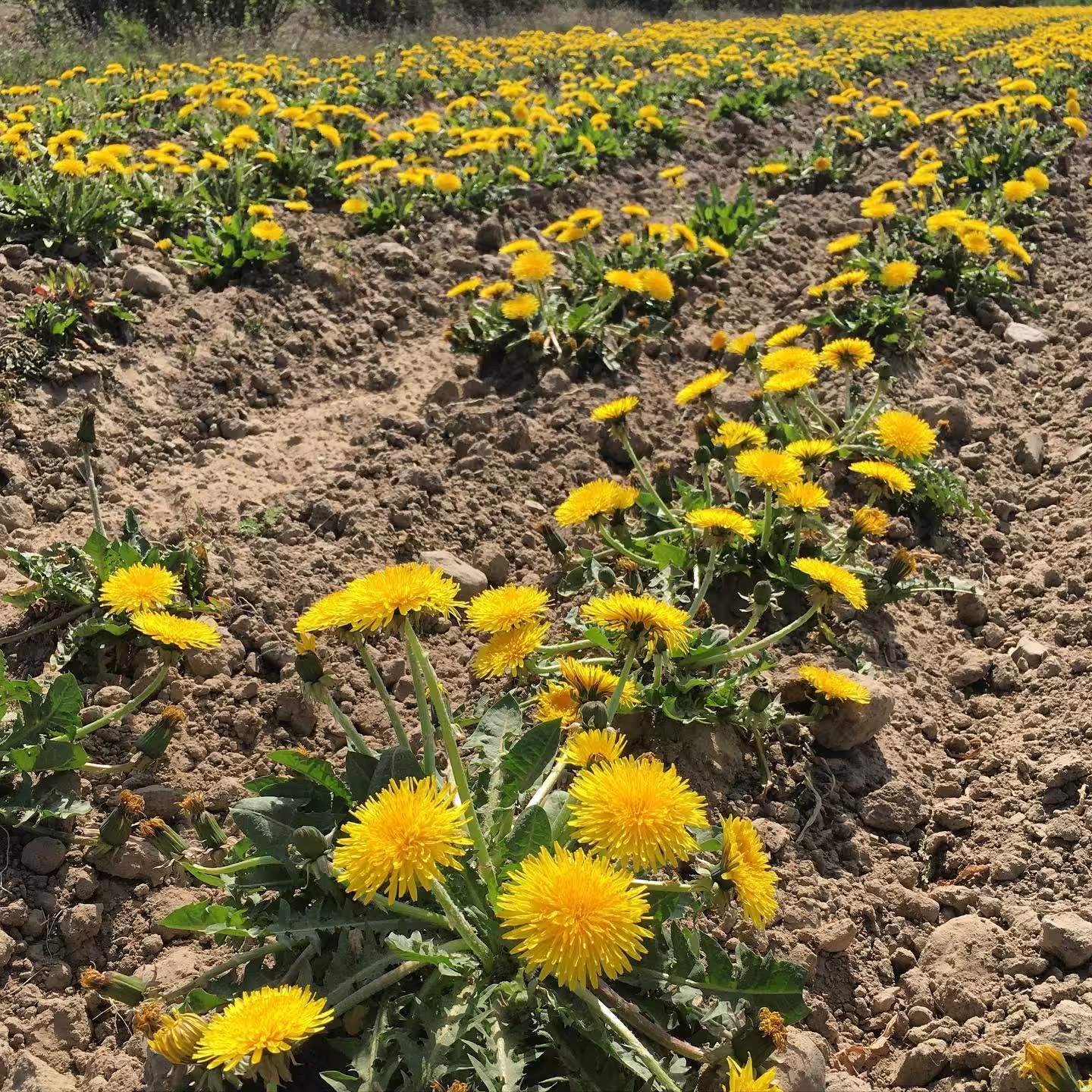
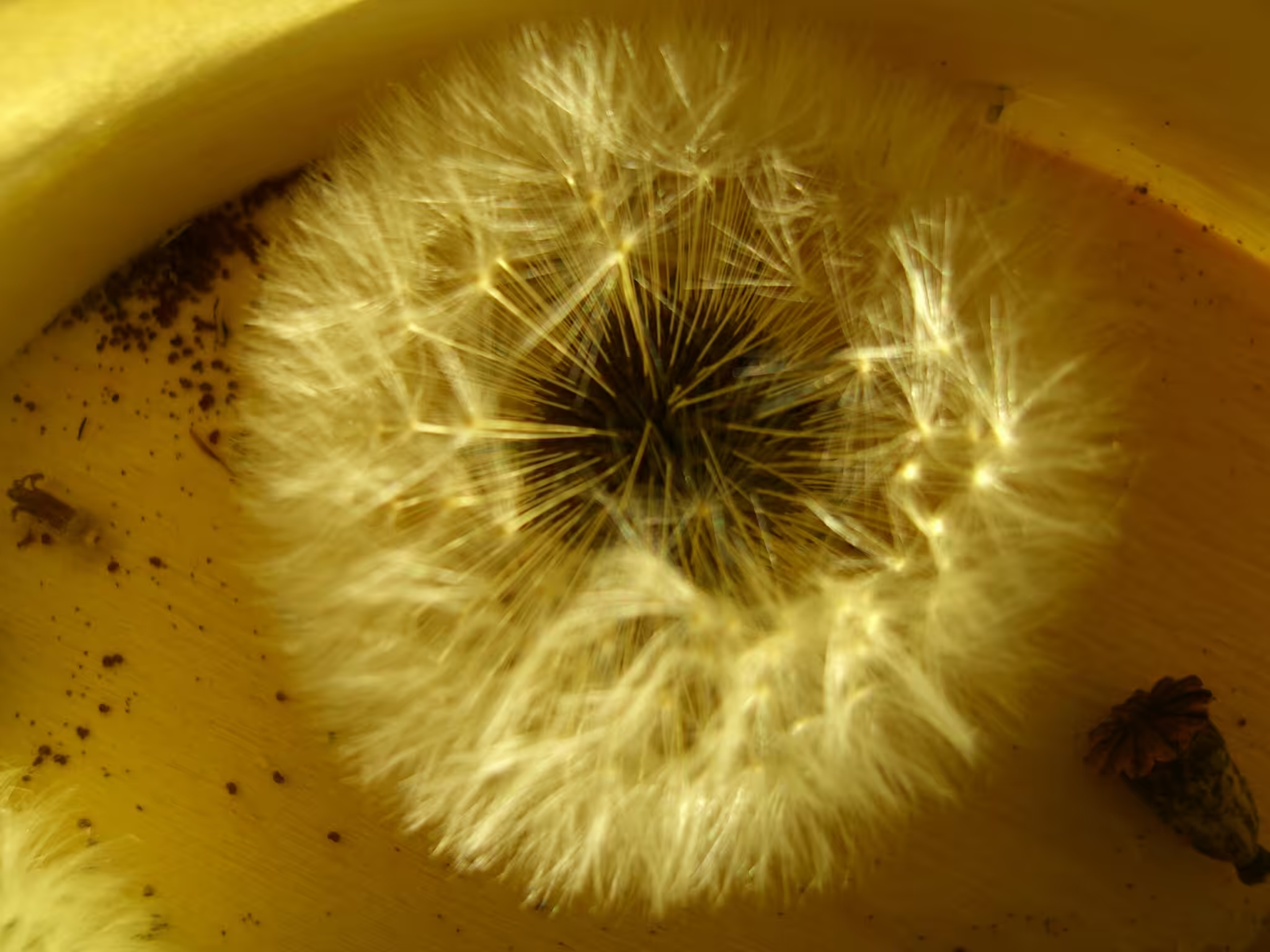
- Dandelion
- Goutweed
Mode of action
The little space that we balcony dwellers have on our balconies or windowsills should be used sensibly. This data clearly speaks in favor of wild plants.
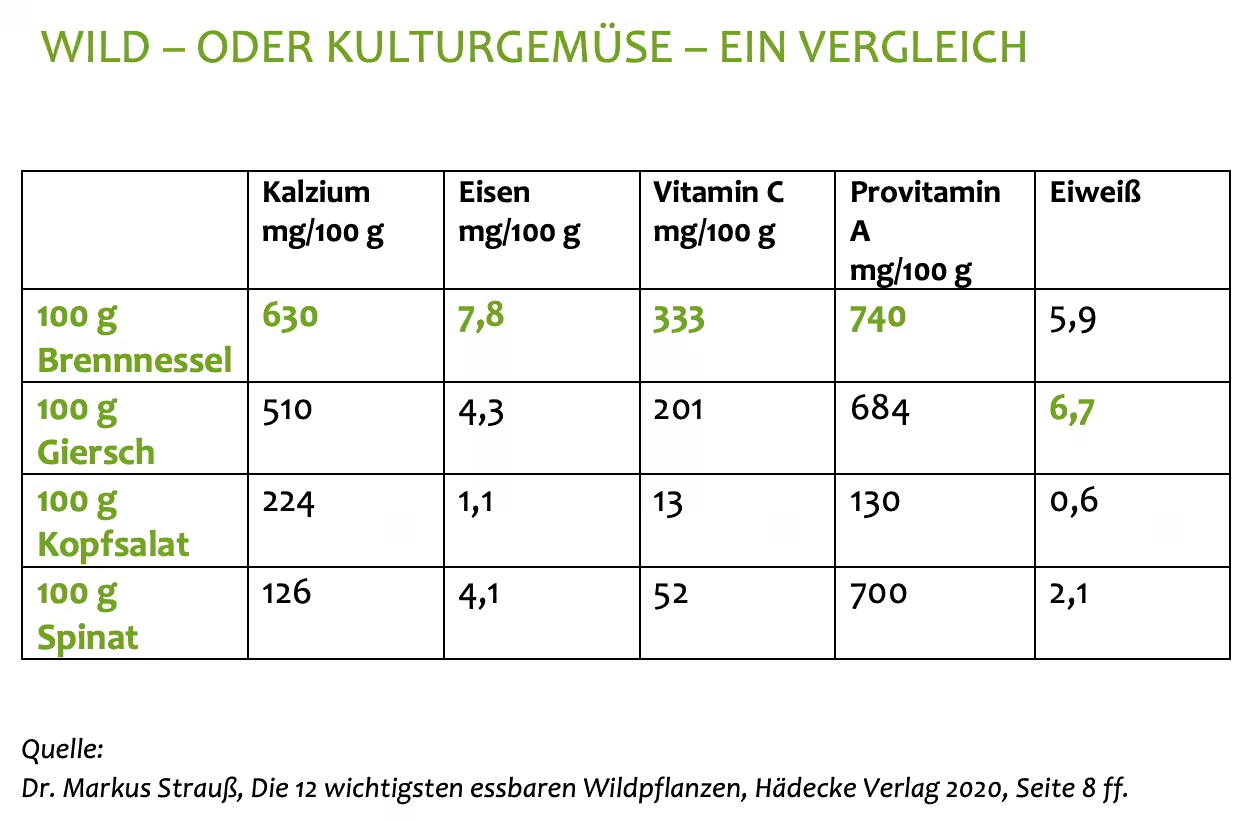
Enter the world of edible wild plants, which are full of vitamins, minerals and bitter substances that are scarce or missing in today’s commercially available vegetables. They are an original, high-quality alternative to iceberg, head and romaine lettuce with significantly more healthy ingredients. They are also extremely robust because they grow outdoors in nature without any care. Anyone can eat edible wild plants all year round. They enable us to take care of our health by filling our stores of vital substances through daily use and enabling us to constantly cleanse ourselves. Unfortunately, this knowledge and experience has been lost in the course of industrialization. It used to be taken for granted and passed down from generation to generation. Here I present the three best perennial, hardy wild plants that bring us health and are of great value to native wildlife. Native superfood for us and the animals. Make sure you always have a variety of wild herbs and greenery to keep you happy. When drinking tea too, change after 6 weeks!
Introduction to cultivation
In nature, these superfood wild plants like to grow in nutrient-rich locations in sunny to semi-shady areas. The stinging nettle is even a nitrogen indicator. They should be planted in containers in a nutrient-rich location and fertilized well, as we want to harvest lots of leaves.
The three edible superfood plants presented here are very insect-friendly plants, but in nature they do not grow in dry, nutrient-poor, barren soil like most of the most beautiful flowering wildflowers, such as round-leaved bellflower, common dost and dove scabious. This difference is very important for the soil to be chosen (nutrient-rich), fertilization (abundant) and watering (plentiful).
All three plants are extremely vigorous and fill larger planters. The dandelion, with its taproot up to 1 m long, is well served by a deeper pot. In the wild, it grows not only in meadows, as everyone will have seen, but also sparsely in cracks in walls. We want to harvest lots of leaves, so create a fat meadow for it. These plants are best grown in a balcony box with a water reservoir for good irrigation; deep pots are even better. Larger containers are ideal for a rich yield, so that the rhizomes, the root system, have room.
Propagation is done with seeds or by digging up and transplanting cuttings from existing plants from garden owners or on walks along the roadside. Take soil from the original location with you, then the plants will have an easier time in the familiar soil life. As always, water well. The suppliers listed under recommendations have seeds and strong organic plants available for purchase.
Sowing wild plants
Using the example of sowing a wildflower meadow, you can see what is important when sowing wild plants in pots. The wild plant propagator Nina Keller from Yosana explains it practically. Of course, these tips also apply to sowing nettle, ground elder and dandelion.
You are currently seeing a placeholder content of YouTube. To access the actual content, click on the button below. Please note that data will be passed on to third-party providers.
More informationInstructions for planting
When planting, the container is filled about halfway up with suitable planting substrate and pressed down. With purchased young plants, the plant is only placed in the new pot as deep as it protruded above the substrate surface in the old pot. Fill the gaps around the root ball with substrate and press down firmly so that the roots have good contact with the substrate. It is important to leave a watering rim of approx. 1.5 cm to the edge of the container so that no water runs out when watering. Now water the plant vigorously, providing support Effective microorganisms, Compost tea or plant homeopathy to promote root formation. To promote rapid root growth, you should not water for the next few days. If you water too often after planting, the roots will remain relatively shallow on the surface and will not develop vigorously.
After sowing and planting, it is important to label what is in which planter. Many people like to label wooden sticks from popsicle sticks or wooden sticks with a ballpoint pen or pencil, but everything only lasts for one season. It makes sense to keep a balcony diary. Those who keep one with discipline find it very helpful. They note down the names/varieties and location of the seeds or plantings, write down successes and failures and can thus look up their own experiences over the years.
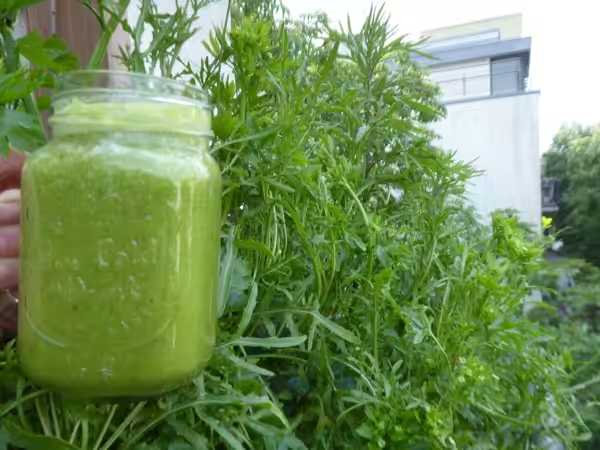
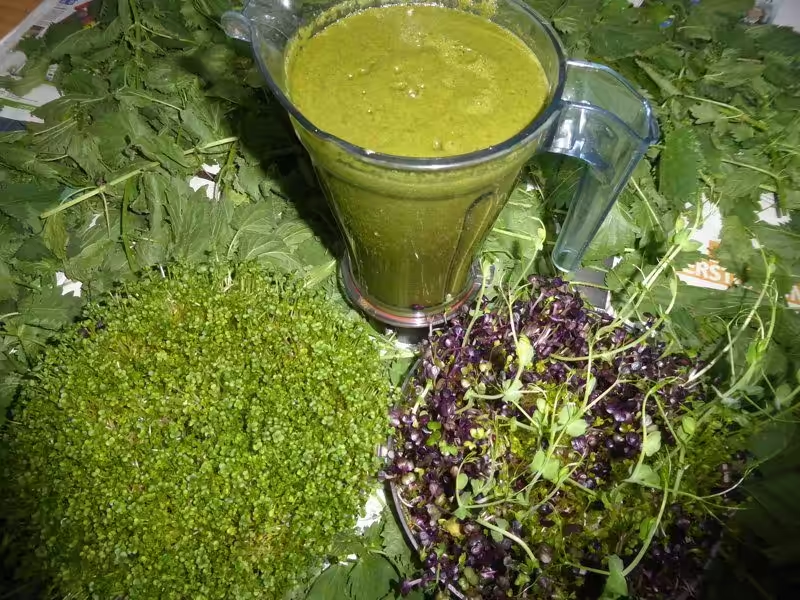
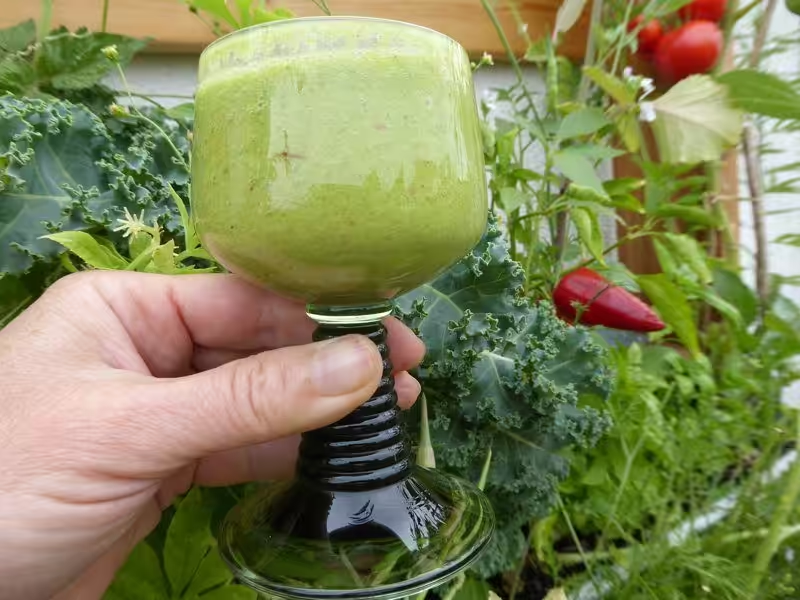
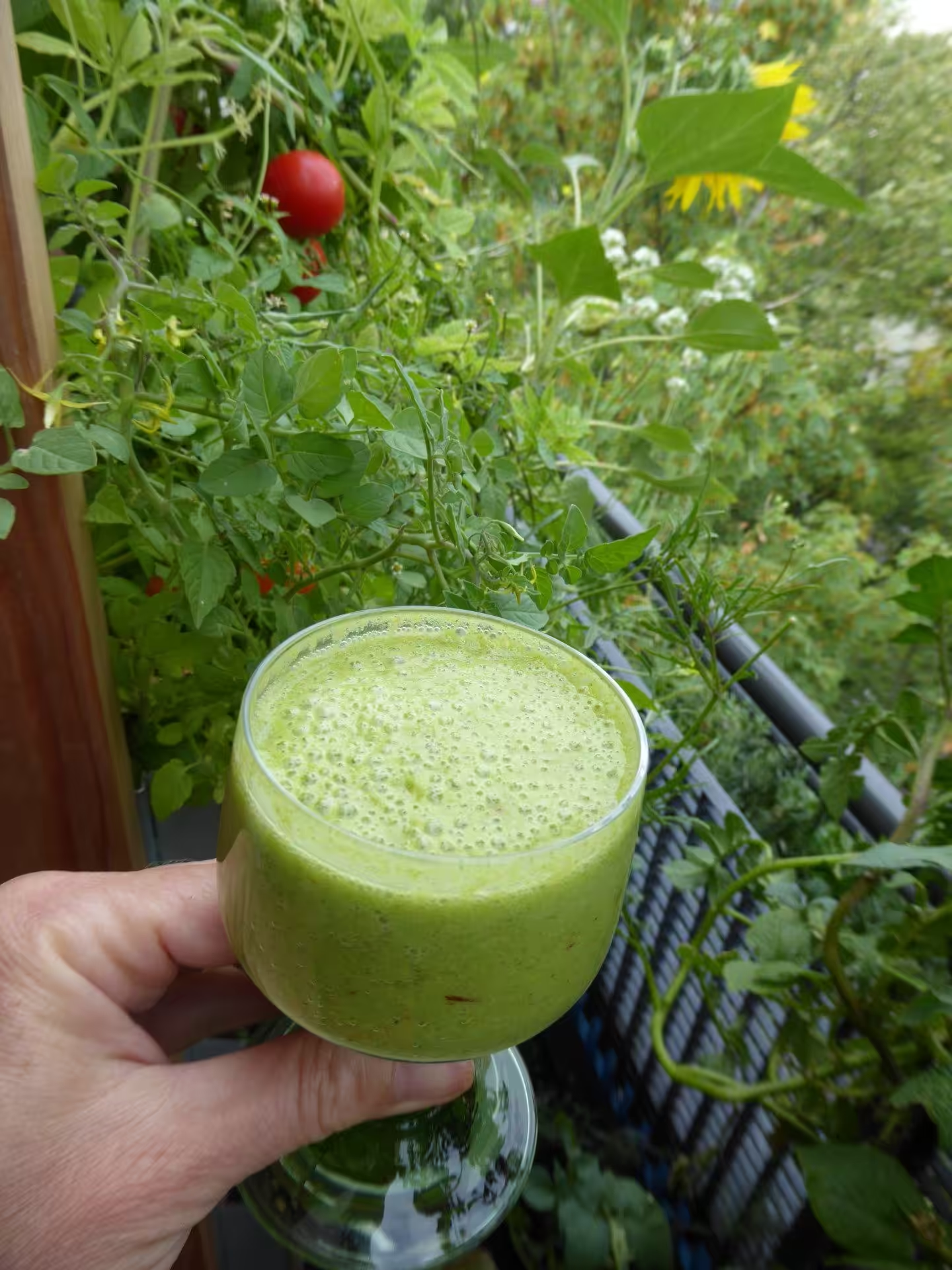
My favorite recipe: Green smoothie “nutrient bomb”
These three edible wild plants, which are rich in vital substances, are an important part of this course, but also Sprouts or microgreens:
- Stinging nettle
- Dandelion
- Goutweed
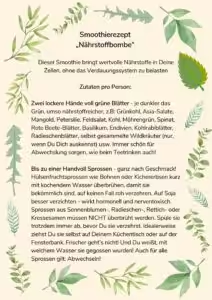
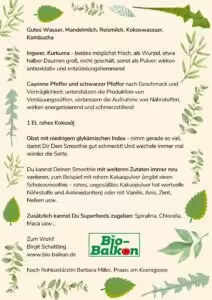
Recipe Wild vegetables “like spinach” with nettle, goutweed, dandelion and much more.
Download the recipe „Wild vegetables like spinach“

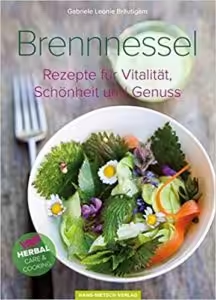
Book recommendations with recipes

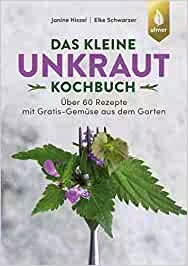
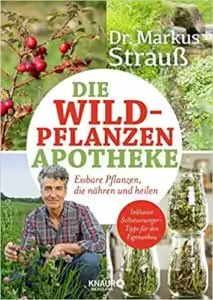
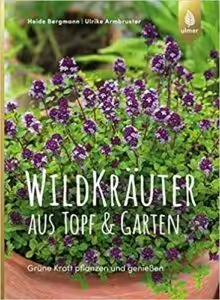
Further worthwhile book recommendations
 English
  Deutsch